From the unintelligible cacophony to the discovery of intelligent technologies,the common binding thread across ages was the sense of wonder, the inherent curiosity to know about not only one’s own existence but life itself. This remarkable ability to question the nature of our own reality has brought into existence magnificent civilizations. It is this tenacity that expanded our horizons of vision, and it is this quest that distinguished animals from humans. The developments, especially post-Renaissance, were the watershed movements in human civilization history; they not only changed the prejudiced geocentric perspective but also altered the established, unjustified beliefs. This major transition for the next couple centuries
liberated the wings of thought and imagination, which gave birth to the industrial revolution.This was the first mass-scale delegation of labor to mechanically synchronized things called machines. Technology here became the natural catalyst for the freedom of the oppressed. But,in contemporary times, with the rapid development of AI-based technologies, the challenges are multi-pronged, delving into regulatory and societal aspects. This essay will try to address the first while reflecting on the latter.
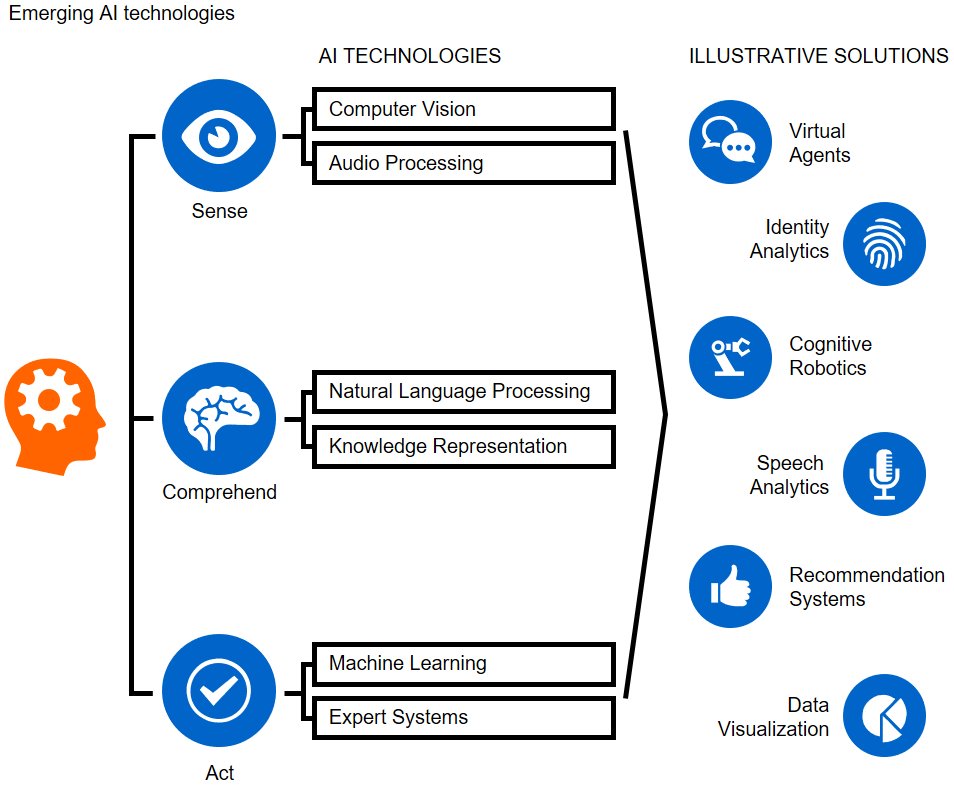
Researchers, scientists, and futurists tend to describe our societal relationship with technology as one where we tend to overestimate the effect of a technology in the short term but underestimate its effect in the long-term.Although we have in one form or another been living with artificial intelligence (AI) for nearly 50 years, its development is likely to be impacted by the widespread sensationalism surrounding the way AI is characterized, combined with a lack of public understanding and education about the technology.
We are on the edge of a future that is so different from the past that it risks the advances previously made that have impacted society being inconsequential. As a result, there is an urgent need to confront the issues that the development of AI presents us with. While many people are blissfully ignorant and often dismissive about the progress of robotics and AI in particular, the threat it posits will affect the way we are employed and also how we conduct our
lives in the future. This is not exclusive to the success of the development of technology but, more emphatically, how we develop our future economies by ensuring everyone has a role in this new world.
Consequently, it is evident that the adoption of AI will need to be actively controlled through ethical and regulatory oversight. Amongst many challenges, the one that needs to be emphasized more involves educating people about the changes to occur and ensuring that those changes can be readily understood. What AI does and how it does it needs to be transparent so
that people will trust it and see a need to adopt it. This applies equally to both legislators and society at large.
The framing of issues becomes more significant as AI weaves irreversibly into our lives. For example, the issue regarding the responsibility for those decisions where AI goes wrong : can those systems have legal personality in the same way that a company does?
The potential weaponize of AI and the need for proscription become the other major challenge. As we explore the data-driven nature of AI systems, it becomes imperative to remove bias from data, and those using the data should also be forced to explain why they need data and how they are going to use it.
Consensus can be reached on various challenges and solutions. While the idea of creating a supranational body is a good one, it requires great global collaboration. The Organization for Economic Cooperation and Development (OECD), the United Nations, and all other organizations are suggesting ways forward in this area. Despite these challenges, we can create a legal, ethical, and regulatory environment that not only encompasses investment and development but also offers safeguards.
Isaac Asimov, in 1942, propounded the ‘three laws of robotics’ which greatly focused on keeping a product of technology as subordinate to the human mind.On similar lines, first and foremost, it is crucial to ensure that an AI system is explicitly subject to all the laws of the land to which its human operator is subject. Secondly, the government must put in place adequate safeguards in the form of prior intimation of extraction of information to individual users i.e., to the source of information. The accountability solely on the intermediaries will be of no use unless the public at large is awarded about the nuances of technology and its impacts on their lives.
Leave a Reply